
Gender Gap In Tech Roles: What Stalls Women’s Movement?
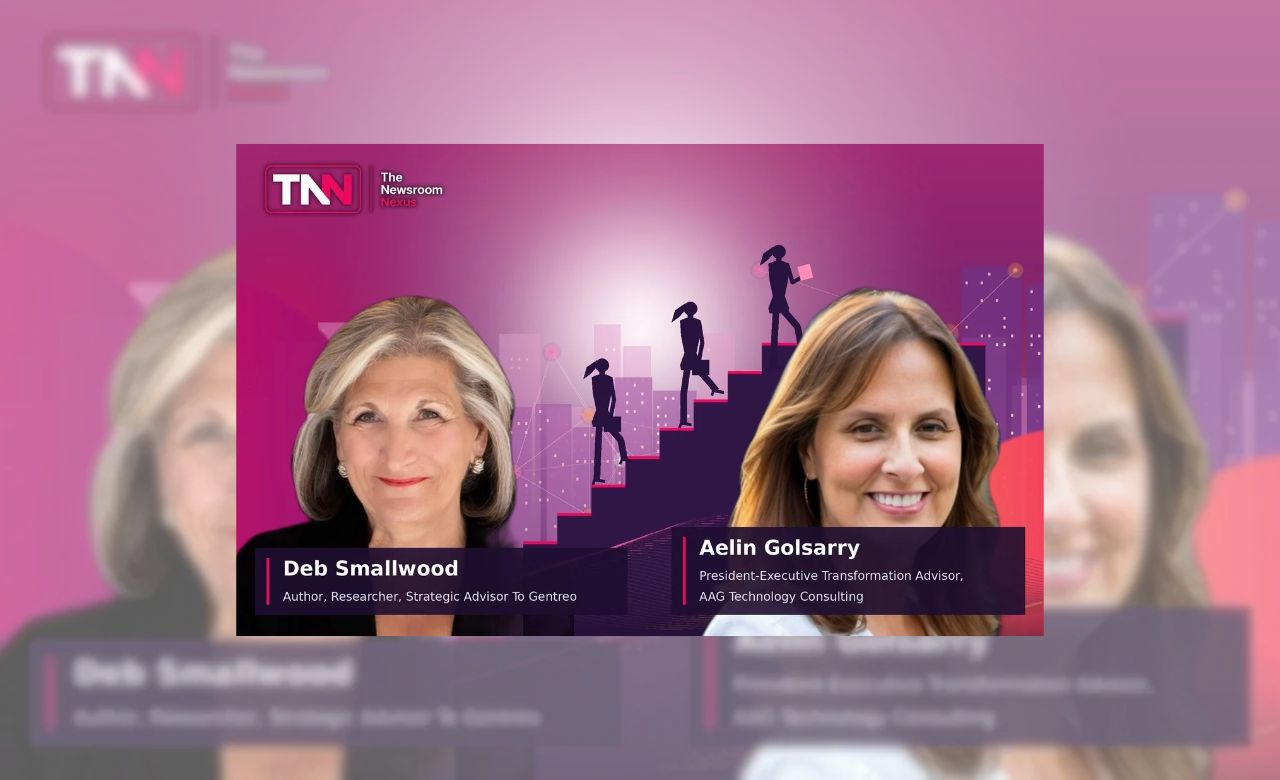
While women are joining the tech workforce, data shows that they aren’t moving up. What is stalling their upward movement?
Women are entering the technology workforce, but their representation falls sharply as they move towards leadership. The gap goes beyond hiring. It affects promotions, access to C-suite roles and retention.
The World Economic Forum’s Global Gender Gap Report 2026 highlights this divide. Women hold just 8.6% of chief technology officer (CTO) roles. These positions can offer the experience and decision-making authority needed to reach the highest levels of leadership.
The problem extends beyond representation. ISACA’s 2024 Tech Workplace and Culture survey found that 87% of respondents believed gender disparity existed in the sector. Yet only 41% of businesses had programmes to hire more women in tech.
Deb Smallwood, author, researcher and strategic advisor to Gentreo, said, “DEI programs across the USA are being dismantled and lack funding. The specific women programs, sponsorship for conferences continue to decrease across all sectors. There are still a few IT/technology focus sponsored by CIO not HR.”
Further, Aelin Golsarry, President-Executive Transformation Advisor, AAG Technology Consulting, said, “I’m not surprised by those numbers. Recognizing that a problem exists and actually doing something about it are two very different things. But I also think we need to look beyond hiring programs. You can hire more women into technology and still have the same problem ten years later if those women aren’t given the opportunities, authority, and support to move into leadership. And if the culture doesn’t change, what exactly are we hiring them into?”
With such opinions, data and evolving job roles, the leadership gap raises a bigger question. Can the industry expand women’s access to technical careers while giving them a fair chance to reach its most influential positions?
The Tough Ladder
Getting into technology is only the first step. Many women still struggle to find a clear path to senior roles. Promotions, professional networks and leadership opportunities can determine how far they advance.
“I think one of the biggest problems is how we evaluate leadership and what we believe women are worth… When hiring, compensation, and promotion decisions are influenced by subjective judgments rather than actual capabilities and results, women can be disadvantaged at every stage of their careers,” Aelin Golsarry said.
The WomenTech Network’s 2025 Barriers to Leadership report found that 72% of respondents had experienced gender bias that affected their promotion or leadership opportunities. Another 70% believed their organisations’ promotion processes were unfair or lacked transparency. Further, 67% said work-life balance policies hurt their leadership prospects.
These findings raise questions about how companies assess talent and select leaders. They also point to barriers that recruitment alone cannot remove.
Access to professional networks is another concern. The same survey found that 58% of respondents lacked equal access to networking opportunities compared with male colleagues. These networks can help employees find mentors, gain visibility and learn about opportunities. When access is unequal, women may have fewer chances to build relationships that support career growth.
The 2025 Lovelace Report by WeAreTechWomen and Oliver Wyman points to a related problem: retention. A lack of advancement opportunities was the most commonly cited reason for leaving, reported by 25% of respondents. Lack of recognition followed at 17%, while inadequate pay accounted for 15%.
Together, these findings suggest that companies must look beyond recruitment. They need to examine how they distribute opportunities, recognise performance and prepare employees for senior roles.
The Leadership Pipeline Under Pressure
The leadership gap is not just about individual career choices. It also reflects how employers identify talent and distribute opportunities, particularly when economic conditions tighten.
A similar trend was observed in the World Economic Forum’s 2024 Global Gender Gap Report, but on different grounds. It found that women’s representation declines more sharply between entry-level and C-suite roles in STEM occupations than in non-STEM fields. It also reported that women accounted for 36.4% of leadership hires in early 2024. Weaker labour-market conditions were associated with lower hiring rates for women into senior leadership.
This highlights the risk of treating leadership representation as a recruitment issue alone. Companies may hire women into technical roles without creating clear paths for them to advance. Economic uncertainty can make that progression even harder if employers reduce senior hiring or narrow opportunities.
For technology companies, the question is whether their talent systems can support women’s progress across different career stages. Hiring is one measure of inclusion. Promotion, retention and access to leadership are equally important.
The AI Challenge
AI adds another dimension to the problem. AI engineering, data science and related fields increasingly shape business strategy. Representation in these areas could influence who gets access to emerging leadership opportunities.
The World Economic Forum’s Global Gender Gap Report 2024 found that women’s share of AI engineering talent had more than doubled since 2016. Yet women remained underrepresented in the field. The report also found that women accounted for only 30% of enrolments in AI and big data courses.
Deb Smallwood further added, “This is dismal. AI is the next big wave for women to be clear and confident on who they are, what career goals they want, and position themselves for this new wave of technology. It is all in front of them now.”
These figures point to a continuing gap in access to skills that could shape the future of work. They do not prove that women will be excluded from AI leadership. However, fewer opportunities to develop specialised skills or lead major projects could create additional barriers as the industry evolves.
There is also a question of influence. Companies increasingly use AI in recruitment, performance management, customer service and business operations. Decisions about how they design and deploy these systems can affect workers and consumers.
A narrow leadership pipeline risks limiting the range of experiences represented in those decisions. This does not mean women will automatically make AI more ethical or inclusive. It means companies should ensure that gender does not restrict access to the expertise and authority needed to shape these systems.
As AI becomes more central to technology strategy, companies must consider who gets to build it, manage it and set its direction. That requires more than bringing women into technical roles. It also requires giving them opportunities to lead.
Beyond Recruitment Programmes
Companies recognise the gender gap, but their response needs to extend beyond hiring.
ISACA’s 2024 Tech Workplace and Culture survey found that 87% of respondents believed women were underrepresented in IT. Yet only 41% of businesses had programmes to hire more women in technology. The survey also found that 43% of female respondents and 21% of male respondents cited the dominance of male role models and leaders as a reason for women’s underrepresentation.
Recruitment initiatives can help widen the entry-level talent pool. But hiring targets cannot show whether women receive fair access to promotions, technical assignments and senior decision-making roles.
Employers need to examine the entire career pathway. They should track promotion rates by gender and seniority, make leadership criteria transparent, and ensure that access to mentors, sponsors and high-visibility projects does not depend on informal networks.
Companies must also identify when women leave technical roles and understand why. If employees leave because they see limited opportunities for advancement, recruitment alone will not solve the problem.
Accountability matters, too. Leadership development programmes have limited value if managers do not identify talent fairly or promotion decisions remain opaque. Companies should measure how many women they recruit, how many advance and how long they remain in technical careers. They should also track how many reach positions with real decision-making authority.
Addressing The Leadership Gap
Technology companies are competing for people who can build, manage and govern increasingly complex systems. Losing experienced employees or overlooking potential leaders can narrow that talent pool.
No single policy or programme can close the gap. Nor do these surveys show that every technology market faces the same barriers. Women’s experiences vary by country, role, seniority and workplace. Still, the findings point to a common concern: women’s presence in technology has not translated into comparable representation in its most influential roles.
That distinction matters because leadership is not simply the final rung on a career ladder. Leaders set priorities, allocate resources, build teams and decide which technologies companies develop and deploy. Their choices shape both business strategy and the future of work.
When women remain underrepresented at that level, companies must ask whether their talent systems make full use of the people already in the industry. They must also consider what they lose when experienced employees leave because advancement seems out of reach.
The real test is not how many women enter technology. It is whether they can progress, lead and influence the industry’s direction. Companies need to examine who gets the first promotion, who leads critical projects, who earns a place in the C-suite and who leaves before getting there.
If employers continue to treat recruitment as the finish line, they will miss the deeper problem. A workforce can become more diverse at entry level while its most powerful roles remain out of reach. Closing that gap requires companies to turn access into advancement, and talent into opportunity.