Does Employee Tracking Really Help Performance Management?
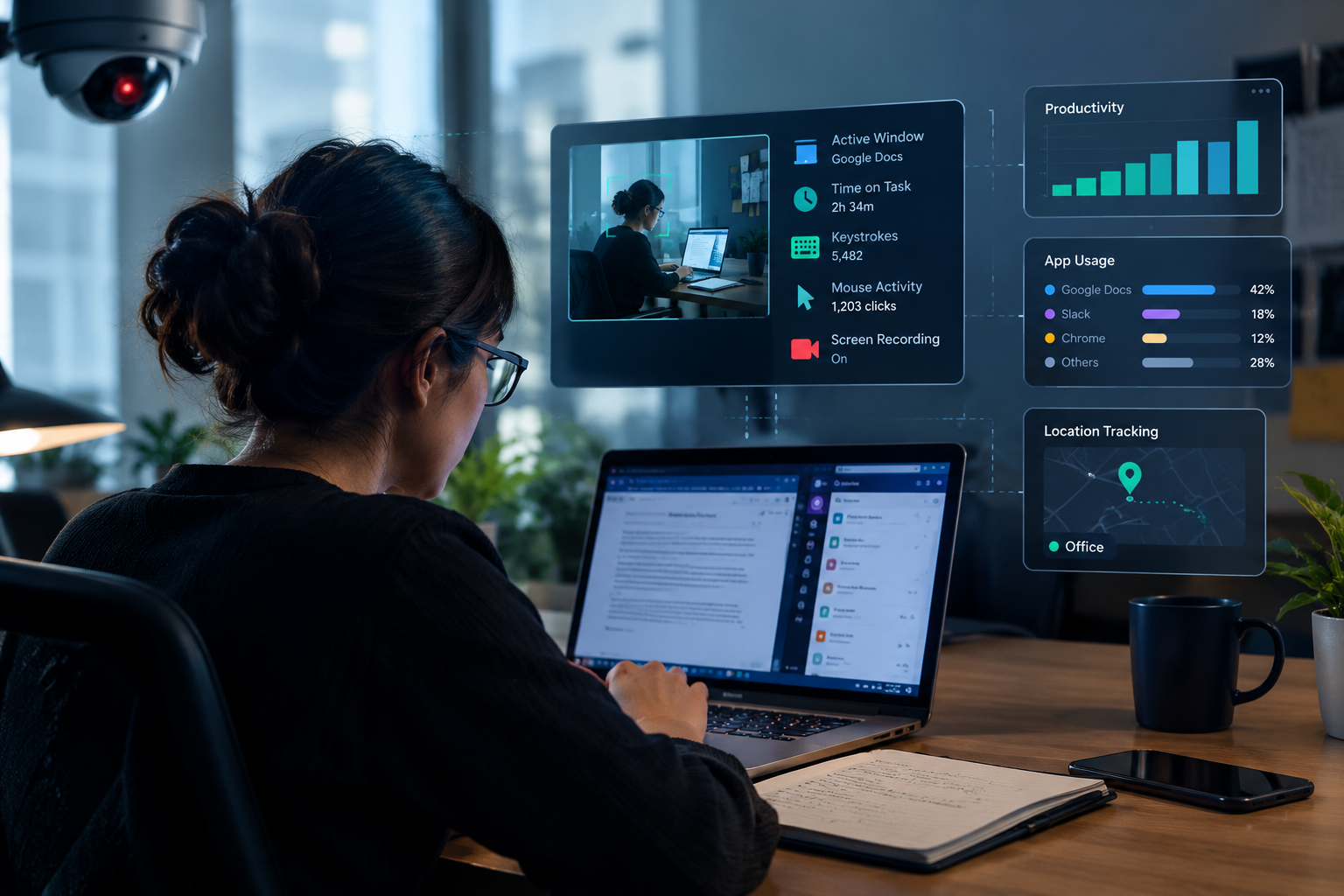
Does employee monitoring affect productivity positively? What about employees’ rights to privacy and trust?
As the workplace becomes increasingly digital, employees are tracked for working hours, task completion, work speed, etc. Though employers claim that this makes performance analysis easier, they also face the tough question of how much data is enough for efficient performance management while securing privacy.
According to the OECD’s 2025 study on algorithmic management, 90% of managers surveyed in the United States said that their companies had adopted at least one algorithmic management tool to instruct, monitor or evaluate workers. Adoption averaged 79% across France, Germany, Italy and Spain, and stood at 40% in Japan. These tools do not all involve employee surveillance or artificial intelligence (AI), but the findings illustrate how technology is changing the way organisations manage their workforces.
But are organisations mistaking visibility for productivity? A 2025 review published in Annual Review of Organizational Psychology and Organizational Behavior found that the overall relationship between electronic monitoring and employee performance appeared neutral. Rather, it found a small positive association between monitoring and employee strain, alongside a small negative association with job attitudes. For employers, the challenge is no longer simply how much they can measure, but whether the data they collect helps them understand performance or creates new problems for the people they manage.
A record of computer activity may establish whether an employee used a device, but it cannot, by itself, establish the quality of the work produced. Similarly, the number of tasks completed may reveal output without accounting for their complexity or the time required to solve an unfamiliar problem.
This distinction becomes particularly important in knowledge-intensive work, where employees may spend considerable time researching, analysing information, planning or collaborating. When performance assessments rely too heavily on easily recorded activity, employers risk overlooking work that creates value but leaves a limited digital trail.
Understanding Productivity
The evidence raises questions about the link between monitoring and performance.
A 2025 review in Annual Review of Organizational Psychology and Organizational Behavior found that electronic monitoring had a broadly neutral relationship with employee performance. It also found a small positive association with employee strain and a small negative association with job attitudes.
These findings do not mean that all monitoring systems fail. Their impact can depend on the type of work, the tools used and how managers apply the data. Monitoring can serve a clear purpose when companies need to protect sensitive information or meet compliance requirements.
The problem arises when employers assume that more data will automatically lead to better decisions. A record of computer activity can show whether an employee used a device. It cannot, on its own, measure the quality of that employee’s work.
Companies must also consider what they lose when they focus on easily measured activity. Research, planning and problem-solving may take time without producing visible results. A dashboard may capture the time spent on a task. It may not capture the value of the outcome.
When Employees Start Working For Metrics
The irony is that while employers track their employees to track performance, studies show that productivity often tends to take a backseat with too much tracking.
Workers who know they are being tracked may focus on the activities that make them look productive. They may respond to messages quickly to show that they are available. They may avoid tasks that require long periods of uninterrupted thought. They may also prioritise targets that are easy to measure over work that creates lasting value.
These outcomes are not inevitable. They depend on how companies use monitoring tools and how much weight managers give to the data. But they highlight a risk. Employees may learn to satisfy the system rather than focus on the purpose of their work.
The effects can vary by industry. For example, in logistics, digital systems may assign tasks, track locations and record completion times. In healthcare, for example, they may help coordinate complex operations. Such tools can serve useful purposes. But the way companies use them can also affect workers’ autonomy and workloads.
For managers, the question is simple. Does monitoring help employees do their jobs better? Or does it mainly give managers more control over how they work?
How Much Employee Data Is Too Much?
Though remote and hybrid work are inevitable today, it also raises a serious question about data security and privacy. Employees may work from home, use personal devices or communicate through digital platforms. These activities can create detailed records of their working lives, exposing them to the risk of data theft.
The 2025 Verizon Data Breach Investigations Report, which analysed more than 22,000 security incidents worldwide, found that 29% of breaches in Europe, the Middle East and Africa (EMEA) originated from internal actors. Of these breaches, 8% involved misuse, including unauthorised use of data that violated company policies. The findings highlight the risk organisations face when employees misuse the access granted to them.
On such grounds, the UK Information Commissioner’s Office guidance on monitoring workers says employers should ensure that monitoring is lawful and fair. It also warns that excessive monitoring can affect workers’ privacy and well-being. The guidance recommends that organisations identify a clear purpose and use the least intrusive method that can achieve it.
The legal position differs across countries. In the European Union, the General Data Protection Regulation sets rules for the processing of personal data. These rules can apply to employee data as well. Other countries have their own privacy and employment laws.
But legal compliance is only one part of the issue. Companies must also decide how they will use the information they collect.
A system introduced to protect company data may later become a tool for evaluating employee performance. Information collected for one purpose may then influence decisions about another. This can create problems if employees do not know how their data is being used.
Employers should set clear limits. They should explain what they collect, why they need it and who can access it. They should also tell employees whether the data could affect performance reviews or disciplinary decisions.
The aim should be to collect enough information to meet a clear business need, not to collect everything the technology makes available.
The AI Angle
AI could make employee monitoring more complex. While traditional tools monitor activity, AI-powered tools are enabled to analyse patterns and generate assessments. Depending on the system, employers may use these outputs to identify performance concerns, allocate work or support workforce planning.
But accurate data does not guarantee accurate conclusions.
A system may record how often an employee sends messages or how long a task takes. That does not establish whether the employee is productive or engaged. These conclusions require more context than activity data alone can provide.
The OECD’s research on algorithmic management highlights concerns about accountability when these systems make mistakes. Managers may also find it difficult to understand how some tools reach their conclusions.
It is pertinent to remember that AI does not remove the need for human judgment. It makes that judgment more important when systems produce assessments that appear objective but rely on limited indicators.
Companies must also consider whether employees can question an assessment or correct inaccurate information. Without such safeguards, a flawed metric could influence decisions about someone’s career.
The Approach To Test
Employee monitoring is unlikely to disappear. Companies will continue to use digital tools to manage work, protect information and track operations. The challenge is to use these tools without undermining employee trust.
The first step is to define a clear purpose. Employers should know what they want to achieve before introducing a monitoring system. They should also consider whether a less intrusive method could achieve the same result.
The second step is to measure outcomes, not just activity. Companies should assess whether monitoring improves performance, reduces errors or addresses a specific risk. They should not assume that a higher volume of data means better management.
The third step is transparency. Employees should know what information is collected and how it will be used. Companies should also set limits on who can access the data and how long it will be retained.
Finally, managers must retain responsibility for decisions. Monitoring tools can provide useful information. They should not replace a proper assessment of an employee’s work, skills and contribution.
Companies should also review these systems regularly. A tool that serves a clear purpose today may become unnecessary as work practices change. Regular reviews can help organisations identify excessive data collection and remove measures that do not deliver clear value.
The Real Measure Of Employee Monitoring
The ability to track employees has grown. But the ability to collect data is not the same as the ability to understand people. Monitoring can help companies manage risks and improve some processes. It can also create stress, weaken trust and encourage employees to focus on the wrong measures. The outcome depends on how the tools are designed and used.
For employers, the goal should not be to collect the maximum amount of employee data. It should be to collect the information they need to make sound decisions.
The real test is whether monitoring helps people work better and helps businesses perform better. If it only makes employees more visible, companies need to ask what the data is actually worth.