
US Suspends Green Card For Cognizant, Infosys, TCS, Wipro and Microsoft
The US suspends several major technology companies, including Microsoft, Cognizant, Infosys, Tata, Adobe, etc from Labour Dept’s PERM.
The Trump administration has suspended several major technology companies, including Cognizant, Infosys, Tata, Wipro, HCL, Capgemini, Microsoft and Adobe, from the US Department of Labour’s Permanent Labour Certification Programme (PERM), a key step in many employment-based green-card applications.
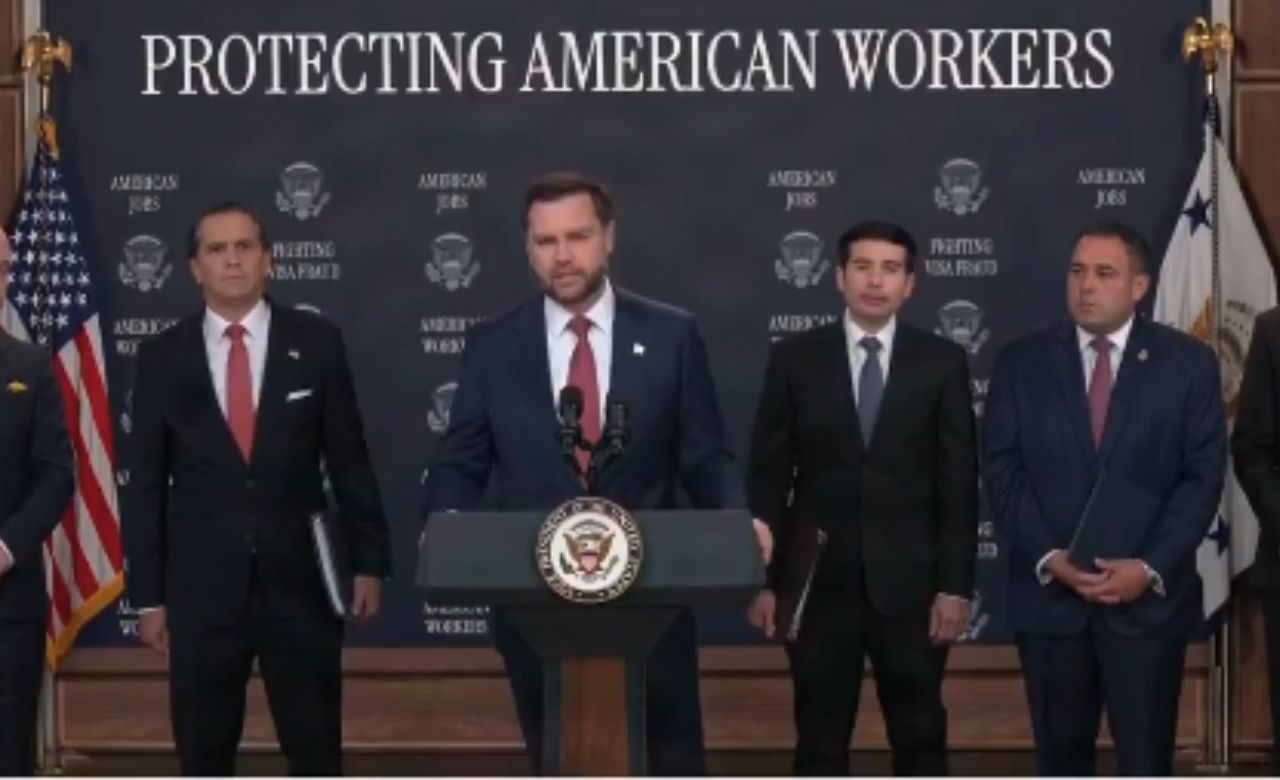
The US Labour Secretary Keith Sonderling announced the action on Thursday alongside Vice President JD Vance and the head of the US Anti-Fraud Task Force. The administration accused the companies of misusing employment-based immigration programmes and taking jobs away from American workers.
“I am hereby suspending from the Permanent Labour Certification Programme some of the largest IT outsourcing firms in the world, Cognizant, Infosys, Tata, Wipro, HCL, and Capgemini,” Sonderling said.
He added that Microsoft and Adobe were also being suspended.
“We will not accept any new or process any pending permanent labour certification applications involving these companies,” Sonderling said.
The administration said the move was linked to alleged fraud and formed part of a broader effort to encourage companies to hire more American workers.
Vance singled out Microsoft, linking its layoffs to its use of H-1B visas. The Associated Press reported that he cited the company’s job cuts and employment of foreign workers as evidence of what he described as abuse of the system.
“If you do the math, for every worker that Microsoft laid off, they replaced that worker with one and a half foreign indentured servants,” Vance said.
In a video posted on X, Vance said the administration wanted technology companies to continue investing and growing in the US but expected them to prioritise American workers.
Vice President JD Vance announces the suspension of the PERM Program for Microsoft:
“Thanks to an ongoing investigation, we have decided to suspend the PERM program for Microsoft, which means they will no longer be able to take those H-1Bs and apply for permanent resident status within the United States of America. Now our message to Microsoft and to any other foreign or domestic corporation is quite simple. We obviously want you to thrive in the United States of America. We want people to invest in the United States of America, particularly the American technology sector. We’re the biggest boosters of your industry. We want you to continue to grow and to employ a lot of people, but we want you to employ American workers. And so our message to Microsoft is, you’re great American company, but you’ve got to hire great American workers. You cannot lay off American workers and then replace them with foreign indentured servants.”
— Vice President JD Vance (@VP) October 8, 2026
“We obviously want you to thrive in the United States of America. We want people to invest in the United States of America, particularly the American technology sector,” Vance said.
“We’re the biggest boosters of your industry. We want you to continue to grow and to employ a lot of people, but we want you to employ American workers.”
He added that companies should not lay off American employees and replace them with foreign workers.
In a statement on Thursday, the company said most of its US employees were American citizens. Of the roughly 6,000 H-1B applications it filed in its last fiscal year, 80% were to extend or change the status of existing employees, rather than recruit new workers, it said.
The remaining applications were for people already legally present in the US who chose to join Microsoft. According to the company, these hires represented 1% of its US workforce.
Microsoft also said it files H-1B petitions only for workers who meet the programme’s requirements. It added that H-1B employees receive the same pay as other employees doing comparable work and that its compensation levels are among the highest in the technology sector.
The administration, meanwhile, cited the scale of employment-based immigration applications submitted by major technology and outsourcing companies.
“Since 2009, just these companies alone have requested almost three million foreign workers. They’ve received over 230,000 H-1B visa approvals and over 100,000 permanent labour certifications,” Sonderling said.
“That’s hundreds of thousands of jobs that were taken from American workers,” he added.
The figures and allegations cited by the administration have not, in the information provided, been independently established as evidence that the companies improperly displaced US workers.
PERM, or Permanent Labour Certification, is a process administered by the US Department of Labour. In most cases, an employer seeking to sponsor a foreign worker for permanent employment must demonstrate that there are not sufficient qualified, willing and available US workers for the position and that hiring the foreign worker will not adversely affect the wages and working conditions of similarly employed US workers.
The certification is an important stage in many employment-based green-card applications. It is separate from the H-1B visa programme, which allows eligible US employers to hire foreign workers in certain speciality occupations.