
The $44 Bn Space Economy Question India Must Answer
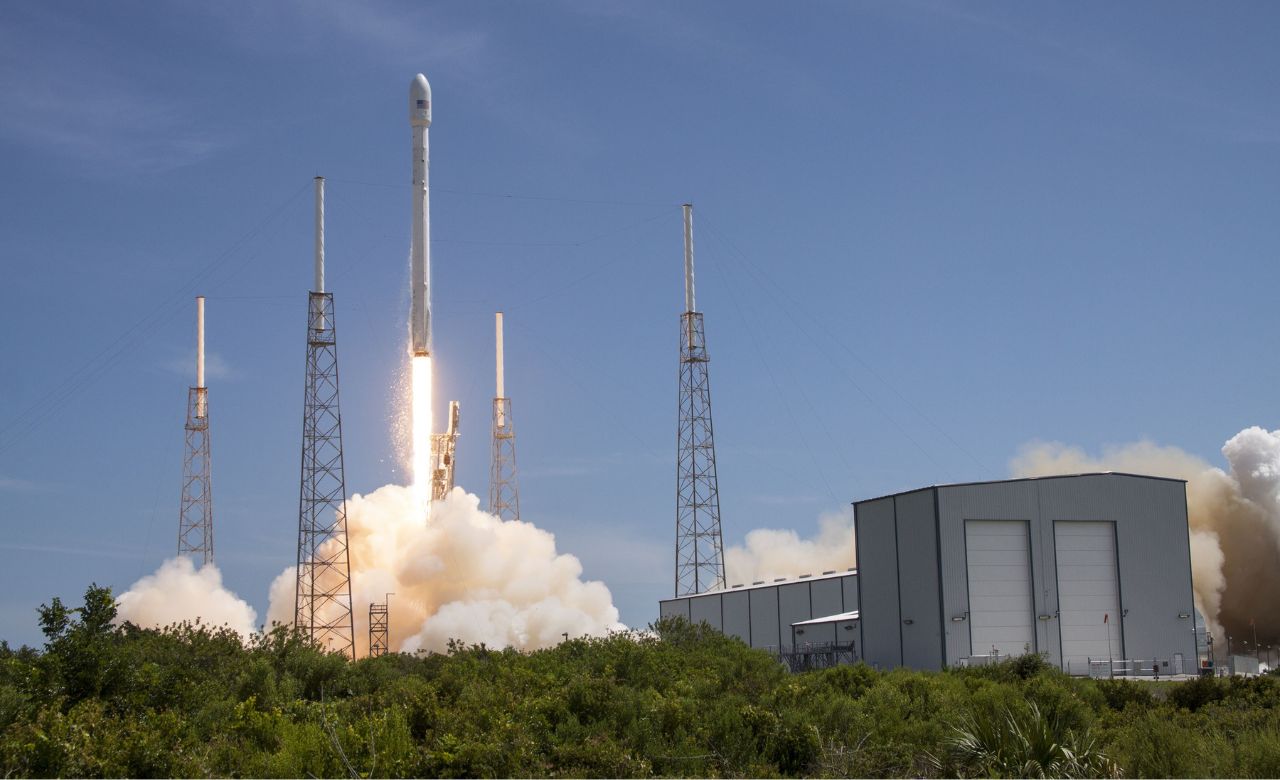
Chandrayaan-3 proved India’s space ability. Building a $44 Bn industry, however, will demand far more than successful launches.
Once, the finance minister, Nirmala Sitharaman, addressed the spacetech industry as part of the country’s sunrise industries. Just a few years ago, the sector was one of the country’s hottest investment themes.
Startups promising private rockets, satellite constellations and space-based intelligence were attracting venture capital, government backing and global attention. Chandrayaan-3’s historic lunar landing only amplified the optimism. All these reinforced the belief that India was on the verge of becoming a major commercial space power.
But is Today, the conversation is noticeably quiet now. Funding has become more selective, startup announcements are less frequent, and the frenzy that once surrounded spacetech has given way to cautious optimism. To some, it may appear that the sector has lost momentum.
According to reports, the Indian spacetech industry received $130.2 Mn in funding, which fell by 55% in 2024 to $59.1 Mn.
Interestingly, the shift is taking place against an ambitious backdrop. Data reveals that India’s space economy’s current estimated worth is around $8 to $9 Bn, contributing roughly 2% of the global space economy.
The government, however, projects its to rise to $44 Bn over the next decade while significantly increasing the country’s share of the global market. Whether the industry can bridge that gap will depend less on spectacular missions and more on its ability to commercialise innovation at scale.
A Freshness In The Startup Ecosystem
For much of its history, India’s space programme was synonymous with ISRO. Private companies largely functioned as vendors supplying components, subsystems and manufacturing support, while mission design, launches and satellite operations remained under the government’s domain.
That began to change in 2020, when the government opened the space sector to private participation, allowing companies to build launch vehicles, satellites and downstream applications while creating the Indian National Space Promotion and Authorization Centre (IN-SPACe) to regulate and facilitate non-government entities.
The reforms fundamentally changed investor sentiment. Over the next few years, startups such as Skyroot Aerospace, Agnikul Cosmos, Pixxel, Digantara, Bellatrix Aerospace and Dhruva Space began developing launch vehicles, satellite platforms, propulsion systems and Earth observation technologies.
The Indian Space Policy 2023 further clarified the roles of ISRO, IN-SPACe and NewSpace India Limited, providing the regulatory certainty that investors had been seeking.
The momentum was reflected in venture capital flows. 2023 was the strongest funding year for the sector, fuelled by policy reforms, successful demonstration missions and growing confidence in India’s commercial space ambitions.
The Reality Check
The slowdown in funding has sparked an uncomfortable question for India’s spacetech ecosystem. Has investor confidence weakened, or has the industry simply entered a phase where capital is becoming harder to earn?
It is pertinent to note that unlike software startups, spacetech companies cannot afford to chase growth at speed. Building launch vehicles, testing propulsion systems, manufacturing satellites and securing regulatory clearances often take years before companies can generate sustainable revenues. That has shifted investor expectations from ambitious ideas to proven execution. The question is no longer whether Indian startups can build rockets but it is whether they can build commercially viable businesses around them.
Can The Industry Deliver The Government Target?
Even as private funding has become more selective, the government’s ambitions have only grown larger. The government’s plan to expand its space economy from $8.4 Bn to $44 Bn and eventually to $100 Bn by 2040 may seem to be a challenge. That would require India’s share of the global space economy to rise from around 2% today to nearly 8% by 2033.
The ambition is bold. The bigger question is where the additional $35 Bn will come from. Policy reforms have undoubtedly created a more enabling environment through liberalised FDI norms, private access to ISRO facilities and a INR 1,000 Cr venture fund managed by IN-SPACe. But government support alone cannot create a robust industry. That will require sustained private investment, large commercial customers, export competitiveness and businesses capable of scaling independently of government missions.
Rockets Alone Won’t Build An Economy
Public imagination often associates the space economy with rockets and Moon missions. The government’s own strategy tells a different story. It looks forward to identifying satellite communications, Earth observation, navigation, downstream data services, manufacturing, exports and in-orbit services as the sectors expected to generate the bulk of future economic value.
That raises another critical question: does India have enough paying customers for these services? Building launch vehicles is only one part of the equation. Creating a thriving space economy will depend on how quickly industries such as agriculture, logistics, mining, telecommunications, insurance and defence integrate satellite-based solutions into their operations. Without strong commercial demand, even the most sophisticated launch capabilities risk becoming underutilised assets.
Encouragingly, some startups are beginning to move beyond prototypes. Skyroot Aerospace is preparing India’s first privately developed orbital launch, while other companies are expanding into satellite manufacturing, propulsion technologies and Earth observation. These milestones indicate that India’s spacetech ecosystem is gradually entering a commercial phase. But it remains far from proving that it can operate at the scale envisioned by policymakers.
The $44 Bn Question
India’s spacetech industry is no longer trying to prove that it can build world-class technology. ISRO has already established that credibility, and private startups have demonstrated that they can innovate alongside the national space programme. The challenge now is fundamentally economic.
Can Indian spacetech companies attract patient capital, compete in global markets, generate export revenues and build businesses that survive beyond government contracts? If the answer is yes, the government’s $44 Bn ambition could become one of India’s biggest industrial success stories.
Once, the finance minister, Nirmala Sitharaman, addressed the spacetech industry as part of the country’s sunrise industries. Just a few years ago, the sector was one of the country’s hottest investment themes.
Startups promising private rockets, satellite constellations and space-based intelligence were attracting venture capital, government backing and global attention. Chandrayaan-3’s historic lunar landing only amplified the optimism. All these reinforced the belief that India was on the verge of becoming a major commercial space power.
But is Today, the conversation is noticeably quiet now. Funding has become more selective, startup announcements are less frequent, and the frenzy that once surrounded spacetech has given way to cautious optimism. To some, it may appear that the sector has lost momentum.
According to reports, the Indian spacetech industry received $130.2 Mn in funding, which fell by 55% in 2024 to $59.1 Mn.
Interestingly, the shift is taking place against an ambitious backdrop. Data reveals that India’s space economy’s current estimated worth is around $8 to $9 Bn, contributing roughly 2% of the global space economy.
The government, however, projects its to rise to $44 Bn over the next decade while significantly increasing the country’s share of the global market. Whether the industry can bridge that gap will depend less on spectacular missions and more on its ability to commercialise innovation at scale.
A Freshness In The Startup Ecosystem
For much of its history, India’s space programme was synonymous with ISRO. Private companies largely functioned as vendors supplying components, subsystems and manufacturing support, while mission design, launches and satellite operations remained under the government’s domain.
That began to change in 2020, when the government opened the space sector to private participation, allowing companies to build launch vehicles, satellites and downstream applications while creating the Indian National Space Promotion and Authorization Centre (IN-SPACe) to regulate and facilitate non-government entities.
The reforms fundamentally changed investor sentiment. Over the next few years, startups such as Skyroot Aerospace, Agnikul Cosmos, Pixxel, Digantara, Bellatrix Aerospace and Dhruva Space began developing launch vehicles, satellite platforms, propulsion systems and Earth observation technologies.
The Indian Space Policy 2023 further clarified the roles of ISRO, IN-SPACe and NewSpace India Limited, providing the regulatory certainty that investors had been seeking.
The momentum was reflected in venture capital flows. 2023 was the strongest funding year for the sector, fuelled by policy reforms, successful demonstration missions and growing confidence in India’s commercial space ambitions.
The Reality Check
The slowdown in funding has sparked an uncomfortable question for India’s spacetech ecosystem. Has investor confidence weakened, or has the industry simply entered a phase where capital is becoming harder to earn?
It is pertinent to note that unlike software startups, spacetech companies cannot afford to chase growth at speed. Building launch vehicles, testing propulsion systems, manufacturing satellites and securing regulatory clearances often take years before companies can generate sustainable revenues. That has shifted investor expectations from ambitious ideas to proven execution. The question is no longer whether Indian startups can build rockets but it is whether they can build commercially viable businesses around them.
Can The Industry Deliver The Government Target?
Even as private funding has become more selective, the government’s ambitions have only grown larger. The government’s plan to expand its space economy from $8.4 Bn to $44 Bn and eventually to $100 Bn by 2040 may seem to be a challenge. That would require India’s share of the global space economy to rise from around 2% today to nearly 8% by 2033.
The ambition is bold. The bigger question is where the additional $35 Bn will come from. Policy reforms have undoubtedly created a more enabling environment through liberalised FDI norms, private access to ISRO facilities and a INR 1,000 Cr venture fund managed by IN-SPACe. But government support alone cannot create a robust industry. That will require sustained private investment, large commercial customers, export competitiveness and businesses capable of scaling independently of government missions.
Rockets Alone Won’t Build An Economy
Public imagination often associates the space economy with rockets and Moon missions. The government’s own strategy tells a different story. It looks forward to identifying satellite communications, Earth observation, navigation, downstream data services, manufacturing, exports and in-orbit services as the sectors expected to generate the bulk of future economic value.
That raises another critical question: does India have enough paying customers for these services? Building launch vehicles is only one part of the equation. Creating a thriving space economy will depend on how quickly industries such as agriculture, logistics, mining, telecommunications, insurance and defence integrate satellite-based solutions into their operations. Without strong commercial demand, even the most sophisticated launch capabilities risk becoming underutilised assets.
Encouragingly, some startups are beginning to move beyond prototypes. Skyroot Aerospace is preparing India’s first privately developed orbital launch, while other companies are expanding into satellite manufacturing, propulsion technologies and Earth observation. These milestones indicate that India’s spacetech ecosystem is gradually entering a commercial phase. But it remains far from proving that it can operate at the scale envisioned by policymakers.
The $44 Bn Question
India’s spacetech industry is no longer trying to prove that it can build world-class technology. ISRO has already established that credibility, and private startups have demonstrated that they can innovate alongside the national space programme. The challenge now is fundamentally economic.
Can Indian spacetech companies attract patient capital, compete in global markets, generate export revenues and build businesses that survive beyond government contracts? If the answer is yes, the government’s $44 Bn ambition could become one of India’s biggest industrial success stories.