
Electricity: The Real Need Of The Hour For AI Adoption
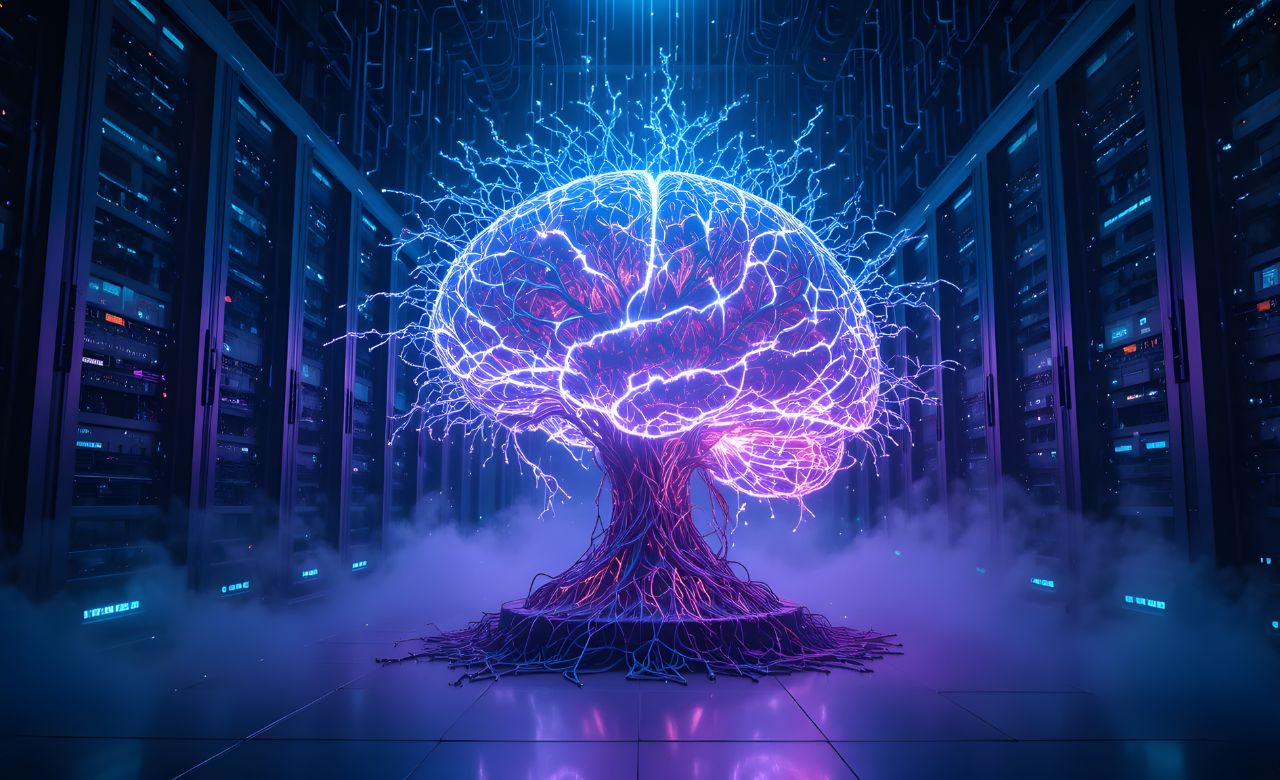
As AI demand surges, electricity, data centres and digital infrastructure are emerging as the biggest constraints. Here’s why.
Artificial intelligence (AI) is unlike any computing revolution that came before it. For decades, the digital economy thrived on efficiency. Computers became smaller, processors became faster, and cloud computing made software infinitely scalable.
AI has disrupted that equation. Unlike traditional applications that retrieve or process existing information, generative AI performs billions of mathematical operations for every prompt. Training frontier models requires thousands of specialised GPUs running continuously for weeks or even months, while serving millions of users simultaneously demands data centres operating around the clock.
The consequences are already visible. According to the International Energy Agency (IEA), data centres consumed around 415 terawatt-hours (TWh) of electricity in 2024. This is roughly 1.5% of global electricity demand. By 2030, that figure is projected to more than double to 945 TWh, driven largely by AI workloads. That would mean data centres consuming more electricity than Japan does today.
The scale of the challenge is forcing the technology industry to rethink its priorities. Today, companies are discovering that even the most sophisticated processors are useless without reliable electricity. In many parts of the world, power is emerging as the real bottleneck, not computing.
That shift is quietly transforming the business strategies of the world’s largest technology companies. They are no longer investing only in AI models or cloud platforms. Increasingly, they are securing renewable energy, signing long-term power purchase agreements, investing in transmission infrastructure and even exploring nuclear energy to guarantee uninterrupted electricity for future AI operations.
The Shift
For years, infrastructure meant fibre-optic cables, telecom towers and cloud servers. Today, it includes substations, transformers, transmission lines, battery storage systems, advanced cooling technologies and reliable sources of electricity. The AI economy is becoming inseparable from the energy economy.
The winners of this new race, therefore, may not all be AI companies.
Behind every chatbot, image generator or coding assistant is a vast ecosystem of businesses that rarely make headlines. Data-centre developers, cooling technology providers, optical networking companies, power utilities, fibre operators and submarine cable providers have become indispensable to AI’s growth. They may not build foundation models, but without them, those models cannot exist at scale.
Investment patterns already reflect that reality. The IEA estimates that global investment in data centres nearly doubled after 2022, reaching approximately $500 Bn in 2024. Increasingly, that capital is flowing not just into servers but into the surrounding infrastructure required to power, cool and connect them.
Real Challenges
The challenge, however, extends beyond generating enough electricity. Delivering that electricity has become equally difficult.
Most hyperscale data centres are built near existing digital hubs where connectivity, skilled talent and cloud ecosystems already exist. Concentrating thousands of megawatts of demand in a handful of locations places enormous strain on local electricity grids. The IEA estimates that unless grid expansion accelerates, around 20% of planned data-centre projects worldwide could face delays because of grid constraints and lengthy connection queues.
That statistic reveals an uncomfortable truth. The next constraint on AI may not be innovation. It may simply be infrastructure.
Governments are beginning to recognise that attracting AI investment requires far more than announcing policy frameworks or research missions. It requires dependable electricity, modern transmission networks, abundant land, water for cooling, high-capacity connectivity and regulatory systems capable of approving projects quickly. In the coming decade, countries will compete as much on infrastructure readiness as they do on engineering talent.
India’s Position
India finds itself in a particularly interesting position. The country is rapidly expanding its digital infrastructure through hyperscale data centres, submarine cable systems and cloud investments while simultaneously pursuing ambitious AI and semiconductor goals.
If accelerated investments match these efforts in grid modernisation, renewable generation and transmission capacity, India could emerge as a significant AI infrastructure hub serving both domestic and regional demand.
In these lines, Tata Communications, Microsoft, Singtel and Lightstorm have recently partnered to create a new submarine cable system connecting India, Malaysia and Singapore. Named I-2SEA, the 3,600-km cable system is expected to be ready for service by the fourth quarter of 2029. It has been designed to support hyperscalers, GPU infrastructure providers and enterprises running AI training and inference workloads between India and Southeast Asia.
Yet this story is not only about rising electricity demand. It is also about how AI can improve the very systems it depends upon.
Looking Ahead
For decades, discussions about technology focused on software. Then they shifted to semiconductors. The AI era is now expanding that conversation to include power plants, substations, fibre corridors and submarine cables. These are no longer peripheral industries supporting the digital economy. These are becoming the digital economy itself.
The next phase of AI will not be determined solely by who builds the smartest models. It will belong to those who can build the strongest foundations beneath them. The countries that invest today in resilient grids, cleaner energy, faster connectivity and digital infrastructure won’t just power the AI revolution, but will shape where it happens. In the years ahead, intelligence may remain the headline, but infrastructure will increasingly be the story.
Artificial intelligence (AI) is unlike any computing revolution that came before it. For decades, the digital economy thrived on efficiency. Computers became smaller, processors became faster, and cloud computing made software infinitely scalable.
AI has disrupted that equation. Unlike traditional applications that retrieve or process existing information, generative AI performs billions of mathematical operations for every prompt. Training frontier models requires thousands of specialised GPUs running continuously for weeks or even months, while serving millions of users simultaneously demands data centres operating around the clock.
The consequences are already visible. According to the International Energy Agency (IEA), data centres consumed around 415 terawatt-hours (TWh) of electricity in 2024. This is roughly 1.5% of global electricity demand. By 2030, that figure is projected to more than double to 945 TWh, driven largely by AI workloads. That would mean data centres consuming more electricity than Japan does today.
The scale of the challenge is forcing the technology industry to rethink its priorities. Today, companies are discovering that even the most sophisticated processors are useless without reliable electricity. In many parts of the world, power is emerging as the real bottleneck, not computing.
That shift is quietly transforming the business strategies of the world’s largest technology companies. They are no longer investing only in AI models or cloud platforms. Increasingly, they are securing renewable energy, signing long-term power purchase agreements, investing in transmission infrastructure and even exploring nuclear energy to guarantee uninterrupted electricity for future AI operations.
The Shift
For years, infrastructure meant fibre-optic cables, telecom towers and cloud servers. Today, it includes substations, transformers, transmission lines, battery storage systems, advanced cooling technologies and reliable sources of electricity. The AI economy is becoming inseparable from the energy economy.
The winners of this new race, therefore, may not all be AI companies.
Behind every chatbot, image generator or coding assistant is a vast ecosystem of businesses that rarely make headlines. Data-centre developers, cooling technology providers, optical networking companies, power utilities, fibre operators and submarine cable providers have become indispensable to AI’s growth. They may not build foundation models, but without them, those models cannot exist at scale.
Investment patterns already reflect that reality. The IEA estimates that global investment in data centres nearly doubled after 2022, reaching approximately $500 Bn in 2024. Increasingly, that capital is flowing not just into servers but into the surrounding infrastructure required to power, cool and connect them.
Real Challenges
The challenge, however, extends beyond generating enough electricity. Delivering that electricity has become equally difficult.
Most hyperscale data centres are built near existing digital hubs where connectivity, skilled talent and cloud ecosystems already exist. Concentrating thousands of megawatts of demand in a handful of locations places enormous strain on local electricity grids. The IEA estimates that unless grid expansion accelerates, around 20% of planned data-centre projects worldwide could face delays because of grid constraints and lengthy connection queues.
That statistic reveals an uncomfortable truth. The next constraint on AI may not be innovation. It may simply be infrastructure.
Governments are beginning to recognise that attracting AI investment requires far more than announcing policy frameworks or research missions. It requires dependable electricity, modern transmission networks, abundant land, water for cooling, high-capacity connectivity and regulatory systems capable of approving projects quickly. In the coming decade, countries will compete as much on infrastructure readiness as they do on engineering talent.
India’s Position
India finds itself in a particularly interesting position. The country is rapidly expanding its digital infrastructure through hyperscale data centres, submarine cable systems and cloud investments while simultaneously pursuing ambitious AI and semiconductor goals.
If accelerated investments match these efforts in grid modernisation, renewable generation and transmission capacity, India could emerge as a significant AI infrastructure hub serving both domestic and regional demand.
In these lines, Tata Communications, Microsoft, Singtel and Lightstorm have recently partnered to create a new submarine cable system connecting India, Malaysia and Singapore. Named I-2SEA, the 3,600-km cable system is expected to be ready for service by the fourth quarter of 2029. It has been designed to support hyperscalers, GPU infrastructure providers and enterprises running AI training and inference workloads between India and Southeast Asia.
Yet this story is not only about rising electricity demand. It is also about how AI can improve the very systems it depends upon.
Looking Ahead
For decades, discussions about technology focused on software. Then they shifted to semiconductors. The AI era is now expanding that conversation to include power plants, substations, fibre corridors and submarine cables. These are no longer peripheral industries supporting the digital economy. These are becoming the digital economy itself.
The next phase of AI will not be determined solely by who builds the smartest models. It will belong to those who can build the strongest foundations beneath them. The countries that invest today in resilient grids, cleaner energy, faster connectivity and digital infrastructure won’t just power the AI revolution, but will shape where it happens. In the years ahead, intelligence may remain the headline, but infrastructure will increasingly be the story.