
Ravana To Rama: Corporate Lessons To Learn From Ramayana
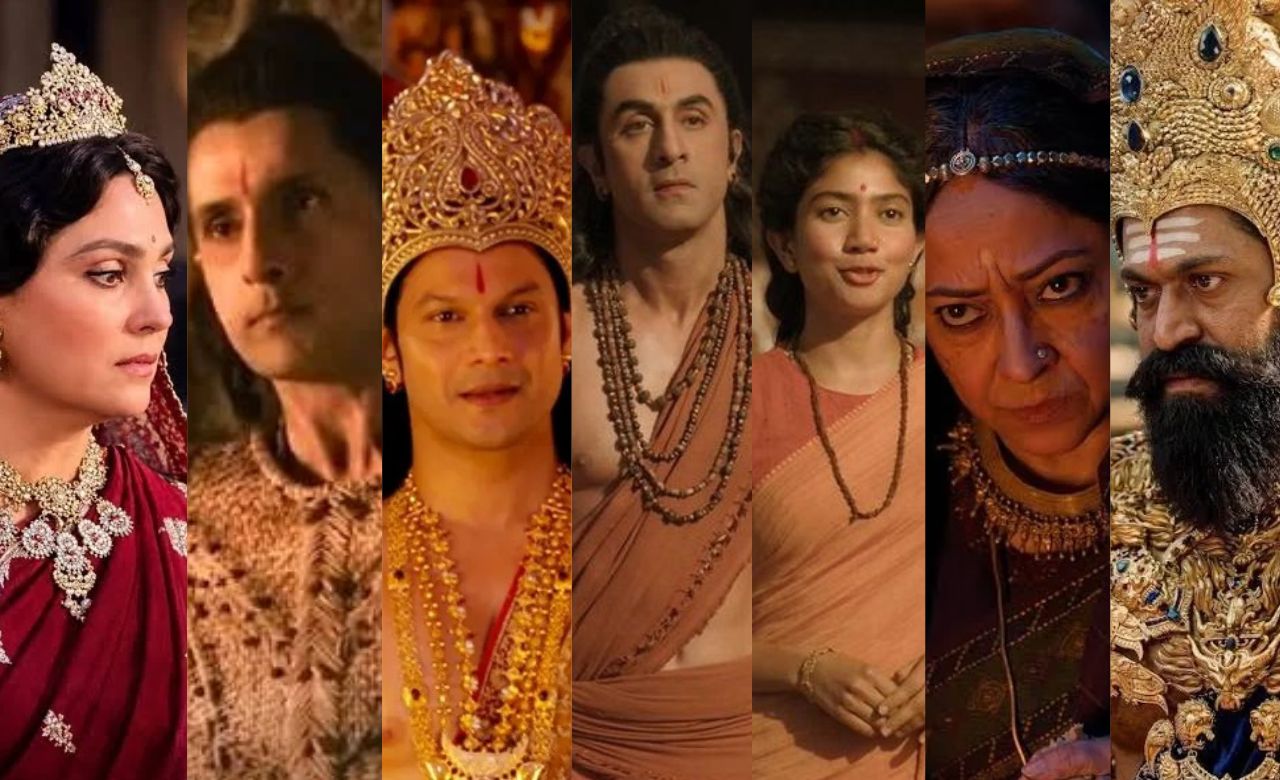
From Ravana’s ambition to Rama’s choices, discover 8 lessons from Ramayana on leadership, workplace dynamics, and HR management.
The release of the first instalment of Namit Malhotra’s Ramayana: Our Truth, Our History generated considerable buzz, driven largely by anticipation around its scale, cast and cinematic treatment. Bringing the epic to the screen, however, presents a unique challenge. From interpreting its iconic characters to creating a visually compelling cinematic experience, the filmmakers face the task of reimagining a story that is deeply familiar to millions of Indians. Few stories are as widely known or culturally embedded, leaving little room for the film to escape public scrutiny.
But beyond its cinematic ambition and box office business, the treatment of the characters in this film looks like something far more than just an epic tale. From Ravana’s ambition and leadership to Rama’s integrity, from Jatayu’s courage to Kaikeyi’s susceptibility, the portrayal offers a number of lessons to learn.
Here are some such leadership and corporate lessons, observed by The Newsroom Nexus.
1. Ravana: Ambition Can Build An Empire, But Ego Can Destroy It
Ravana’s story offers an interesting lesson in the relationship between ambition and leadership. He was a scholar, a musician, a powerful ruler and an accomplished strategist who established Lanka as a formidable kingdom. His desire to protect his people and assert the Rakshasa community’s position reflected a leader’s instinct to challenge the existing power structure.
But leadership requires more than the ability to build an empire. It requires the wisdom to recognise when personal ambition begins to override organisational interests.
The corporate lesson: Organisations often celebrate leaders who are ambitious, competitive and willing to challenge established norms. However, ambition without accountability can become a liability. A CEO who refuses to listen to dissent, a manager who treats every disagreement as a challenge to authority or a founder who puts personal reputation above the organisation can put an entire business at risk.
HR leaders must also recognise that high-performing employees and powerful executives should not be exempted from accountability.
Leadership takeaway: Build boldly, but never allow personal ego to become bigger than the organisation you lead.
2. Rama: Leadership Requires Balancing Larger Responsibilities With Individual Needs
Rama’s decision to accept fourteen years of exile reflects his ability to put a larger responsibility ahead of personal ambition. His journey also highlights the importance of having dependable people around a leader. Lakshmana chooses to accompany him, leaving behind his newly married life with Urmila. Their relationship offers an opportunity to reflect on the trust and commitment that bind teams, while also recognising the personal adjustments that often accompany collective responsibilities.
A similar leadership dimension emerges in Rama’s interaction with Bharata. Though he refuses to go back to Ayodhya with him, he eventually agrees to let Bharata take his kharaun (sandals) back to Ayodhya, as a symbol of his authority. The episode offers an interesting perspective on leadership, succession and the distinction between holding power and being seen as its rightful custodian.
The corporate lesson: Leadership is not just about taking difficult decisions or being willing to make personal sacrifices. It also involves recognising that people around have their own responsibilities, relationships and aspirations. Leaders must be mindful of the expectations they place on colleagues and should distinguish between genuine commitment and an obligation to sacrifice personal priorities.
Leadership takeaway: A leader’s decisions affect more than the person making them. Good leadership requires an understanding of the people who bear their consequences.
3. Sita: Resilience Is Not The Same As Silence
Sita’s journey is an important reminder that resilience is not simply about enduring difficult circumstances. It is also about retaining one’s sense of identity, agency and conviction when circumstances are beyond one’s control.
Her character also challenges the conventional idea that leadership and strength must always be associated with authority or formal positions. In the workplace, employees do not always have the power to influence every decision. Women, in particular, may find themselves navigating organisational structures where their voices and capabilities are not always recognised.
In the end, it is the test of endurance that holds a woman in position.
The corporate lesson: Resilient employees should not be expected to tolerate unhealthy workplaces indefinitely. Organisations must create environments where people can speak up, exercise agency and challenge unfair treatment without fearing professional consequences.
HR leaders should distinguish between employees who are resilient and organisations that are simply asking employees to endure poor management.
Leadership takeaway: Resilience helps people navigate adversity, but a healthy workplace should not make adversity a permanent condition.
4. Lakshmana: Loyalty Is Valuable, But So Is Independent Judgement
Lakshmana’s decision to leave the comforts of Ayodhya and accompany Rama into exile demonstrates extraordinary commitment and loyalty.
Throughout their journey, he remains a trusted companion, protector and support system for his brother. His contribution highlights the importance of people who stand by leaders during difficult periods rather than only sharing in their success.
However, the corporate interpretation of Lakshmana’s character should go beyond unquestioning loyalty. In organisations, dependable employees are often the backbone of leadership teams. They support decisions, manage crises and help translate a leader’s vision into action. But loyalty should never mean abandoning independent judgement.
A good second-in-command must be capable of questioning a decision when it puts the organisation or its people at risk.
The corporate lesson: Organisations need trusted lieutenants, but they also need people who can disagree constructively. When employees become afraid to question their managers, leadership teams risk developing blind spots.
Leadership takeaway: Be loyal to the organisation’s purpose, not blindly loyal to an individual’s authority.
5. Kaikeyi: Do Not Allow Your Judgement To Be Hijacked By One Influential Voice
Kaikeyi’s decision to demand Rama’s exile and Bharata’s coronation is one of the most consequential turning points in the Ramayana.
Before Manthara intervenes, Kaikeyi is not portrayed as someone who necessarily opposes Rama’s coronation. However, Manthara’s counsel changes her perception of the situation. She begins to view Rama’s succession as a threat to her son’s future and acts on that fear.
The episode offers a lesson in how influential voices can shape leadership decisions, particularly when they appeal to insecurity, personal interests and perceived threats.
Corporate organisations face similar situations. An HR professional or a senior manager may develop a negative perception of an employee based on one manager’s account. A leader may make a restructuring decision after listening only to a trusted adviser. A performance review may be influenced by workplace politics rather than actual performance.
The corporate lesson: Leaders must learn to distinguish constructive counsel from manipulation. Listening to advisers is important, but decisions should be based on evidence, multiple perspectives and an understanding of the motivations behind the advice.
For HR leaders, this also highlights the importance of independent grievance mechanisms and fair performance assessment systems.
Leadership takeaway: Never let one influential voice become the only lens through which you see your organisation.
6. Manthara: Influence Without Accountability Can Become Toxic Workplace Politics
Manthara’s influence over Kaikeyi demonstrates how individuals without formal decision-making authority can still shape the direction of an organisation. She does not occupy the throne, but her counsel influences a decision that changes the succession of Ayodhya and eventually the fate of the royal family.
Modern organisations have their own versions of informal power centres. These could be influential senior employees, trusted advisers, executive assistants, close associates of founders or managers who control access to decision-makers.
Informal influence is not necessarily harmful. Such individuals can help leaders understand organisational dynamics and identify problems that formal reporting structures overlook. The problem arises when influence is used to create mistrust, encourage favouritism or manipulate decisions for personal gain.
The corporate lesson: Organisational culture is shaped not only by people with official titles but also by those who influence decisions behind the scenes. HR leaders must pay attention to informal power structures, workplace alliances and patterns of exclusion.
Leadership takeaway: Build a culture where influence comes with responsibility and where decisions are transparent enough to withstand scrutiny.
7. Bharata: Good Leadership Is Also About Knowing When Not To Grab Power
Bharata’s response to Rama’s exile offers one of the strongest examples of leadership without entitlement.
Although Kaikeyi secures the throne for her son, Bharata refuses to accept kingship as a personal victory. He does not consider the circumstances of Rama’s exile a legitimate basis for claiming permanent authority. Instead, he takes responsibility for governing Ayodhya as a regent and places Rama’s sandals on the throne as a symbol of his brother’s rightful authority.
In the corporate world, this resembles an interim leader who takes charge during a crisis without treating temporary authority as a personal entitlement. It also speaks to succession planning. Leadership transitions should be about organisational continuity, not individual ambition or internal competition.
The corporate lesson: The ability to lead is not simply about securing a position. It is also about respecting institutional processes, preparing successors and putting the organisation’s long-term interests ahead of personal advancement.
Leadership takeaway: True leadership is measured not only by how you acquire authority, but also by how responsibly you use it and eventually hand it over.
8. Jatayu: Leadership Means Speaking Up, Even When The Odds Are Against You
Jatayu’s encounter with Ravana is one of the most powerful episodes in Ramayana. When he witnesses Ravana abducting Sita, the ageing vulture king does not remain a bystander. Despite knowing that he is physically outmatched, he attempts to stop Ravana and rescue Sita.
He ultimately loses his life in the battle, but his intervention gives Rama crucial information about Sita’s abduction and the direction in which Ravana has taken her.
Jatayu’s actions offer an important lesson for corporate organisations: leadership is not always about holding a senior position, commanding a team or having the authority to make decisions. Sometimes, it is about having the courage to speak up when something is fundamentally wrong.
In workplaces, employees often witness unethical practices, harassment, discrimination or decisions that put colleagues at a disadvantage. Yet, fear of retaliation, career consequences or isolation can prevent them from intervening.
Jatayu’s story highlights the importance of individuals who refuse to look away when someone needs help.
The corporate lesson: Organisations need people who are willing to challenge wrongdoing, irrespective of their designation or seniority. But they must also create systems that protect those who speak up. Whistleblower policies, psychological safety and accessible grievance redressal mechanisms are essential to building such a culture.
Leadership takeaway: You do not need a powerful designation to demonstrate leadership. Sometimes, the most important contribution comes from the person who refuses to remain silent.
The Bigger Lesson: Organisations Need More Than Powerful Leaders
Ramayana’s characters offer different perspectives on leadership. While, Ravana demonstrates the result of leadership with unchecked ambition, Rama represents strategy. On the other hand, Sita highlights resilience and agency. Lakshmana demonstrates loyalty, while Kaikeyi and Manthara reveal how fear, manipulation and informal power can influence decisions. Bharata, meanwhile, offers a lesson in stewardship.
For corporate organisations, the larger message is that leadership cannot be reduced to individual charisma or authority. It depends on the quality of decisions, the ability to listen, the willingness to accept accountability and the culture leaders create around them.
An organisation may have a Ravana-like visionary at its helm, but without the ability to question authority, recognise mistakes and keep personal ambition in check, even the strongest empire can become vulnerable.
After all, building an organisation takes leadership. Ensuring that it survives takes wisdom.