
When AI Agents Handle Your Money, Who Takes Responsibility?
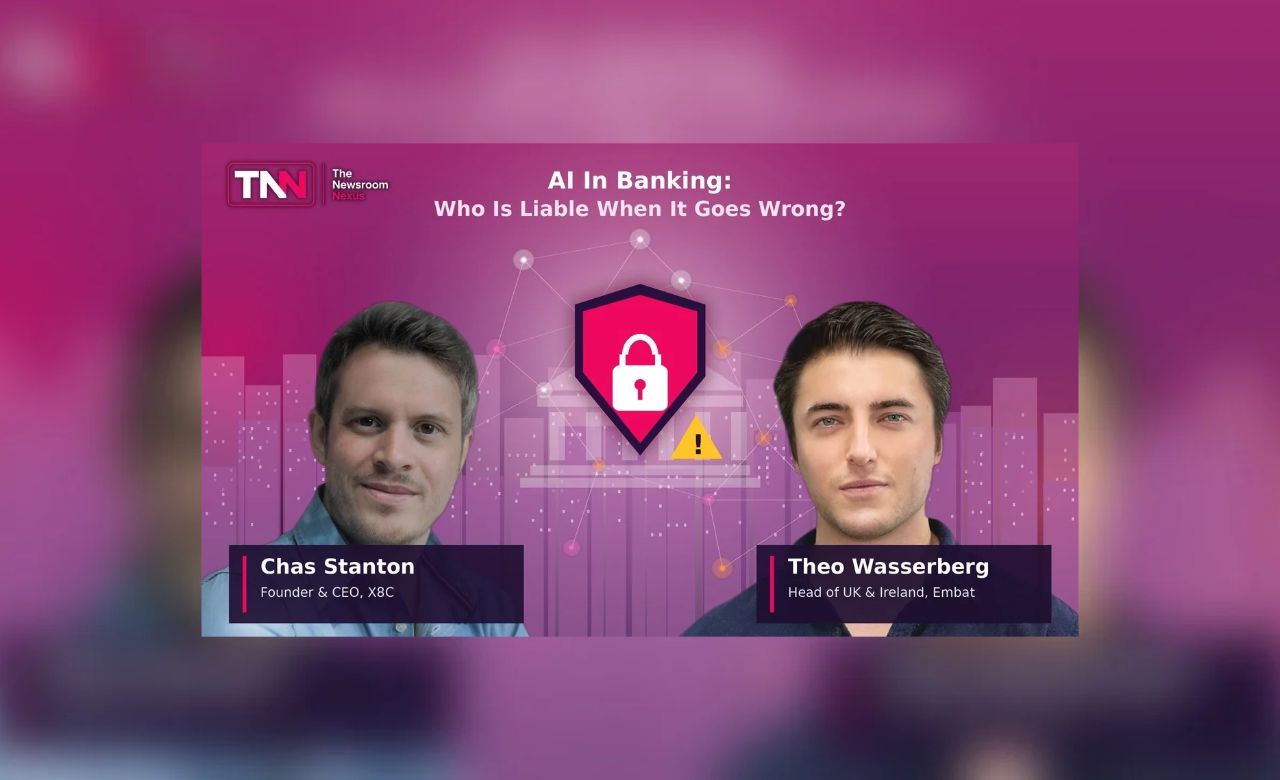
As AI agents gain access to bank accounts and initiate payments, concerns emerge over security, data protection, and banking security.
An AI agent could soon do more than organise your schedule, draft emails or book appointments. It could access your bank account, initiate payments and move money on your behalf. But if the agent makes a transaction you never intended, who takes responsibility?
That question is becoming harder to ignore as banks confront thech risks of agentic AI in the banking sector. Wells Fargo’s revised online access agreement, scheduled to take effect on November 24, 2026, states that instructions, actions and transactions initiated by third-party AI agents will be treated as directly authorised by customers, without further verification by the bank. The agreement also places responsibility for supervising these agents and monitoring their activities on customers.
The development comes amid growing resistance from major US banks. Recently, Reuters reported that major lenders, including JPMorgan Chase, Bank of America and Citi, were restricting access by external agents.
As software begins to act on customers’ behalf, questions around transaction authorisation, financial liability and consumer protection are becoming central to the future of digital banking.
Why are banks concerned about AI agents?
Unlike conventional chatbots, agentic AI systems can interpret instructions, plan tasks and execute actions with limited human intervention. In financial services, this could allow customers to delegate activities such as checking account balances, managing payments and transferring money.
However, granting an AI in the banking sector creates security and authorisation challenges. Banks may struggle to distinguish between an action explicitly instructed by a customer and one generated through an agent’s interpretation of that instruction.
According to an Axios report, some banks have detected agents contacting customer service channels or appearing to take actions independently of user instructions. The report also noted that many banks are considering or allowing read-only access, which lets agents view financial information without initiating transactions.
The International Monetary Fund’s April 2026 report, ‘How Agentic AI Will Reshape Payments‘, identifies several risks associated with agent-mediated payments. These include difficulties tracing the origin of transactions, cybersecurity vulnerabilities and uncertainty over legal liability when autonomous agents act beyond their authority.
Who is responsible when an AI agent makes a mistake?
Wells Fargo’s revised agreement brings this accountability question into focus.
It addresses third-party AI agents, stating that customers who allow such agents to access their accounts accept responsibility for monitoring their activities. The bank also says it is not responsible for the agents’ activities and does not have an obligation to independently verify their instructions or authority.
The agreement covers unintended transactions, errors arising from an agent’s interpretation of instructions and actions resulting from manipulated or incomplete inputs. It also requires customers to revoke an agent’s authorisation and notify the bank when they no longer want it to access their accounts.
However, the agreement qualifies these provisions with applicable laws and regulations. This distinction matters because contractual terms do not automatically override statutory consumer protections.
Commenting on this, Chas Stanton, founder and CEO of X8C, said, “The fundamental consideration for agentic payments is that today, banking authentication assumes a human is pressing the button. Strong customer authentication, one-time passcodes and biometric checks are all designed to evidence that a human is making the transaction. AI agents break this model as the customer can now authorise the agent, but may not authorise the individual transaction, meaning when the agent books the wrong flight or pays a fake invoice, the customer, the bank and the agent provider can each point at the other two for being at fault.”
The legal position becomes more complicated when customers knowingly grant an AI agent access, but the agent subsequently exceeds its instructions. Whether a particular transaction qualifies as authorised will depend on the circumstances and applicable law.
Can banks find a middle ground?
Blocking external AI agents is one way to limit exposure, but it may not be a sustainable response as customers increasingly expect AI systems to perform tasks on their behalf.
Theo Wasserberg, Head of UK & Ireland, Embat suggested, “Corporate banking already offers a blueprint. Businesses have long allowed others to act on their accounts through mandates, with defined limits, dual approvals and a clear audit trail of who authorised what. AI agents need exactly that. They should not hold open-ended credentials. They should hold a digital mandate that sets what an agent can see, what it can do, and when a human must sign off. That also brings clarity to the question of responsibility, because accountability follows the mandate.
The IMF’s report highlights the need to preserve clear authorisation mechanisms, transaction traceability and accountability as agentic payments develop. Financial institutions will also need safeguards that distinguish between a customer’s intended action and an agent’s independent interpretation.
Possible approaches include restricting agents to specific transaction limits, using time-bound access permissions and requiring independent customer authentication before payments are executed.
According to Stanton, “Liability should sit with whoever controls agent limitations at the point of transaction. This should be the financial operators. If a bank or fintech lets an agent spend then it must provide guardrails that protect consumers: spending caps, approved merchants and a mandatory human sign-off when a purchase exceeds a set amount. If it doesn’t, it owns the losses.”
“Caution from the industry’s largest institutions shouldn’t be read as resistance to AI agents. It is the necessary first chapter of their adoption. We saw the same pattern with embedded finance: access started narrow and tightly permissioned, trust was earned step by step, and within a few years it became infrastructure nobody thinks twice about,” Wasserberg added.
As AI agents move closer to controlling real money, the banking industry’s next challenge may be ensuring that customer consent does not become a blanket authorisation for every action an algorithm takes.