
Companies Advice Shanghai To Use AI Better For Growth
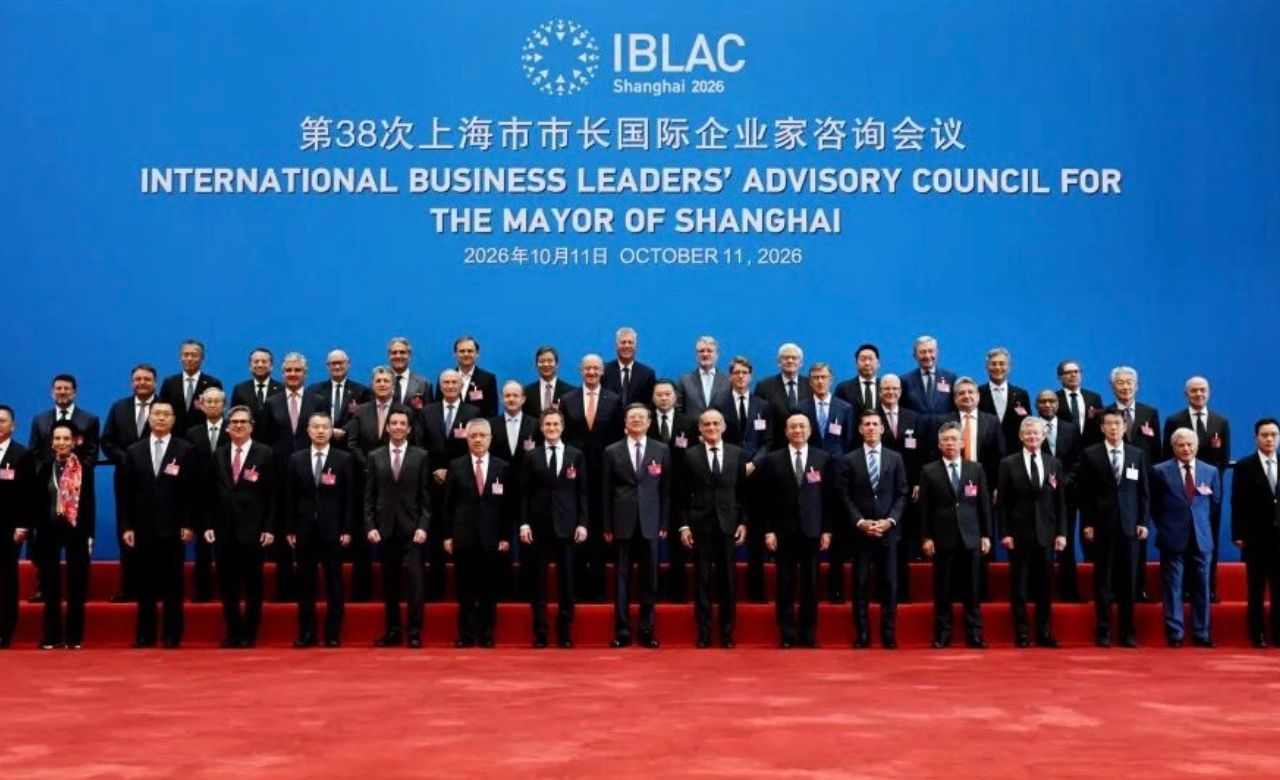
Executives of several MNCs urged Shanghai to use AI better to deepen the integration of services and boost economic growth.
Senior leaders and executives of several multinational companies urged Shanghai to better use artificial intelligence (AI) to deepen the integration of services with manufacturing and consumption, creating new sources of economic growth.
The recommendations were made at the 38th meeting of the International Business Leaders’ Advisory Council for the Mayor of Shanghai (IBLAC), which focused on promoting innovation-driven development in the service sector.
Initiated in 1989, IBLAC serves as an advisory body to Shanghai’s mayor. This year’s meeting brought together 42 multinational executives from 14 countries.
Mohamed Kande, global chairman of PwC, said that Shanghai is well positioned to use technology to strengthen its service economy, given its industrial base, links with the wider Yangtze River Delta region and established services sector.
He suggested connecting technology, research and capital with international service providers to address challenges in the real economy.
Meanwhile, Sir Martin Sorrell, founder and executive chairman of S4 Capital and a former IBLAC chairman, noted that Shanghai was emerging as a testing ground for global AI governance and the intelligent transformation of services.
AI’s role in the global services sector is shifting from an efficiency tool to a “value-chain restructurer”, Sorrell said. He urged Shanghai to align more closely with international rules, facilitate data flows, expand the range of AI applications and build an ecosystem that attracts talent.
He also called for greater international coordination to help Shanghai become a global hub for AI-enabled services.
Zhang Lei, founder and chairman of Hillhouse Investment, highlighted Shanghai’s manufacturing base and its concentration of AI companies, professional service providers, multinational corporations and long-term capital.
He said that the city should place greater emphasis on deploying AI in real-world business settings and open up more operational scenarios for companies to test and implement the technology.
Zhang also called for the development of forward-deployed engineers and professional service firms with expertise in both AI and specific industries.
Such capabilities could help AI applications and service models tested in China expand into international markets, he said.
The recommendations point to a broader challenge for businesses: translating AI investment into operational changes and services that can be deployed at scale, rather than limiting adoption to productivity improvements.
Gary S. Guthart, executive chair of the board of directors at Intuitive Surgical, said combining high-quality medical data with AI and robotics could open up new possibilities in healthcare.
He identified opportunities for Shanghai to pilot high-quality datasets for robot-assisted surgery, test secure approaches to medical data sharing and develop a model for responsible medical data use that could be replicated across China.
The proposals place data quality, secure sharing and responsible use at the centre of efforts to expand AI applications in healthcare.
Jean-Paul Agon, chairman of L’Oréal Group, said AI could help companies offer consumers more tailored products by connecting online and offline shopping experiences.
He also called on Shanghai to strengthen its business ecosystem and position itself as a hub connecting global innovation rules.
The recommendations reflect the range of sectors in which Shanghai’s business leaders see opportunities for AI, from industrial operations and professional services to healthcare and retail.
Across these areas, the emphasis was on connecting AI capabilities with industry expertise, data and real-world applications to develop new services and growth opportunities.